
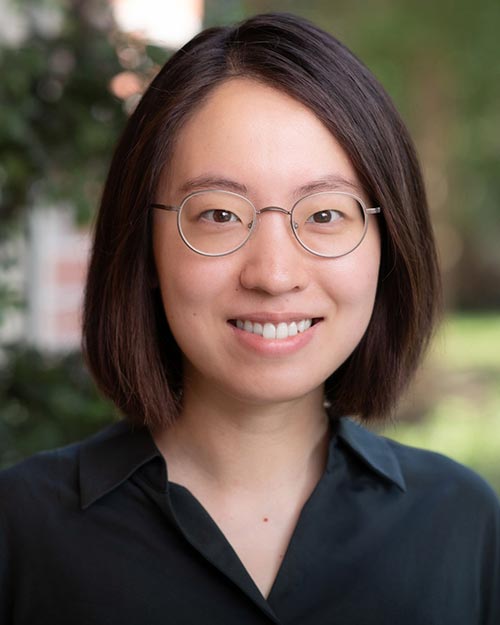
Dr. Yanzhu Chen, Assistant Professor
Education and Training:
- 2015: BA+MS in Physics, University of Cambridge (UK)
- 2021: PhD in Physics, Stony Brook University (with Tzu-Chieh Wei)
- 2021-24: Postdoctoral Scholar, Virginia Tech (with Sophia Economou & Edwin Barnes)
When did you join FSU? What made you choose your university to build your research program?
I joined FSU in 2024. I feel fortunate to have joined this university because the outstanding colleagues and brilliant students make FSU an ideal place for building my research program. The FSU Quantum Initiative provides a great platform for interdisciplinary research, with researchers across different departments working on quantum algorithms and applications, quantum information processing systems such as molecular qubits and optics, and many other topics I am interested in. The Department of Physics has a long-standing strength in both theoretical and experimental condensed matter physics, which align closely with my interests in topological phenomena and their connections to quantum information science.
When did you become interested in quantum research? Who or what inspired you?
I started working in the field of quantum information science in graduate school. My PhD advisor Prof. Tzu-Chieh Wei, who is an expert in both condensed matter theory and quantum computing, was a major influence. Through his guidance and his earlier work, I became fascinated by how certain condensed matter systems can enable quantum computation.
What are your current research interests? Could you give an example of some recent result that you feel especially passionate about?
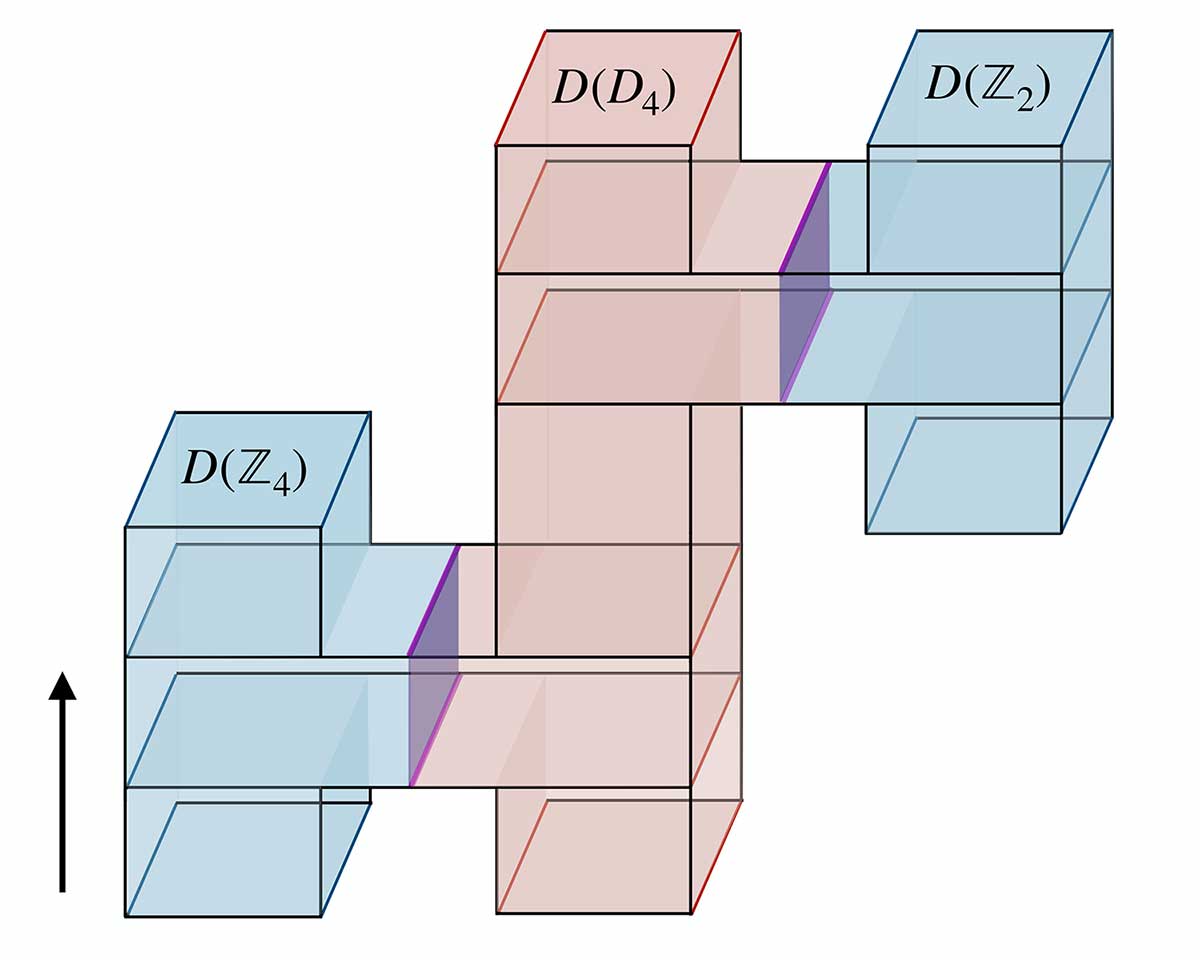
I am interested in quantum error correction and error mitigation, quantum algorithms and quantum simulation, and quantum circuit characterization and benchmarking. Recently I worked with some mathematicians, and we have developed a novel way of implementing non-Clifford logical operations on quantum error-corrected information through hybrid lattice surgery. Our method provides an alternative to conventional approaches, which generally require substantial resources and pose engineering challenges.
How would you describe your research to the general public? Why is your topic important?
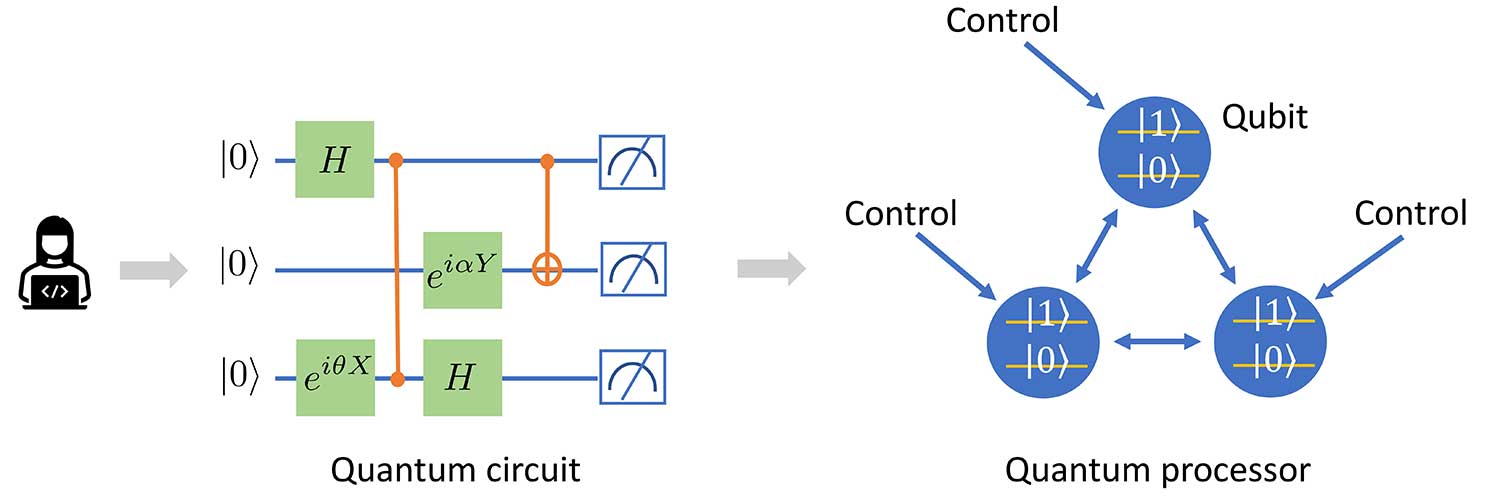
Quantum computing takes advantage of uniquely quantum phenomena, such as superposition and entanglement, which allow even a small quantum system to contain and process a large amount of information. These properties make quantum systems difficult for classical computers to simulate, but they also enable entirely new and more powerful ways of computing. Quantum computers use quantum bits, or qubits, to perform certain tasks that would be impractical or impossible for classical computers. At the same time, quantum information is extremely fragile and prone to errors. My research focuses on two main directions: developing and improving methods to protect and process quantum information, and designing algorithms for practical use. These research topics are essential for unlocking the full potential of quantum technologies and turning them into practical, real-world tools.
What do you think about the future of quantum research? How can FSU contribute to that future?
The future of quantum research is very promising, with rapid progress in controlling and scaling quantum systems in recent years. These new developments open new possibilities in communication, computation, materials science, and more. The field is still in its early stages and is highly interdisciplinary, so it is an exciting time to work in this field.
FSU is helping shape this future by supporting long-term, curiosity-driven research, training the next generation of scientists and engineers, and engaging the public through outreach that builds interest in the field. With collaboration across different departments, FSU can help accelerate breakthroughs and translate scientific progress into real-world applications.
What inspires you? Or what obstacles have you overcome on your journey in quantum research?
I'm particularly inspired by the interdisciplinary nature of quantum information science. The field brings together ideas from physics, chemistry, computer science, and many other areas, and progress often arises from connections among them. Working at this intersection and collaborating with experts across disciplines make the research especially exciting.
What are your interests outside of research? What do you like to do in your free time?
I enjoy reading, watching movies, and hiking.